
The charm and originality of Greek cuisine.
Greek cuisine is, on the one hand, delicious and unique food, and on the other, a kind of philosophy, a way of life for an entire nation and a deeply rooted part of Mediterranean culture, combining simple ingredients with great depth of flavour. Greeks believe that food is not only a source of energy, but also a form of communication, hospitality and enjoyment of life. That is why Greek cuisine so often ranks among the healthiest and most delicious cuisines in the world.
According to Diane Kochilas, a nutritionist and author of the best-selling cookbook My Greek Table, Greek cuisine is ‘the best example of a unique harmony between plant-based foods, proteins and fresh ingredients, which is skilfully adapted to modern healthy eating trends’ (My Greek Table: Authentic Flavours and Modern Home Cooking from My Kitchen to Yours Hardcover, Diane Kochilas, 2018).
What makes a dish truly ‘traditional’?
Traditional Greek dishes are those that have been passed down from generation to generation over a long period of time, have historical value and use purely regional products. Their recipes have been preserved for decades, and sometimes centuries, and are often associated with specific holidays, regions or religious traditions.
According to a study published in the Journal of Ethnic Foods, it is local ingredients and unique culinary heritage that make each dish of Greek cuisine unique (Traditional foods: Why and how to sustain them” A. Trichopoulou, E. Vasilopoulou, K. Georga, S. Soukara, National and Kapodistrian University of Athens, 2006).
Top 20 traditional Greek dishes worth trying
-
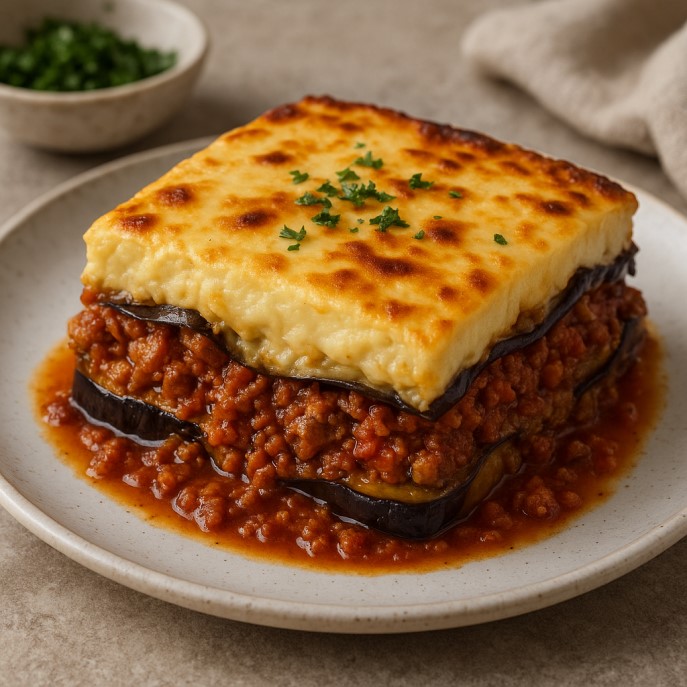
Moussaka.
Moussaka is an interesting casserole made of layers of eggplant, minced meat (usually lamb or beef), tomato sauce and béchamel sauce.
Interesting fact: Moussaka became popular thanks to Greek chef Nikos Tselementes, who adapted French béchamel sauce to Greek tradition in the 1920s.
-
Pastitsio.
This is the Greek version of lasagne – layers of pasta, minced meat with cinnamon and cloves, and cream sauce.
Interesting fact: The name comes from the Italian word ‘pasticcio’, which means ‘mixture’.
-
Dolmadakia.
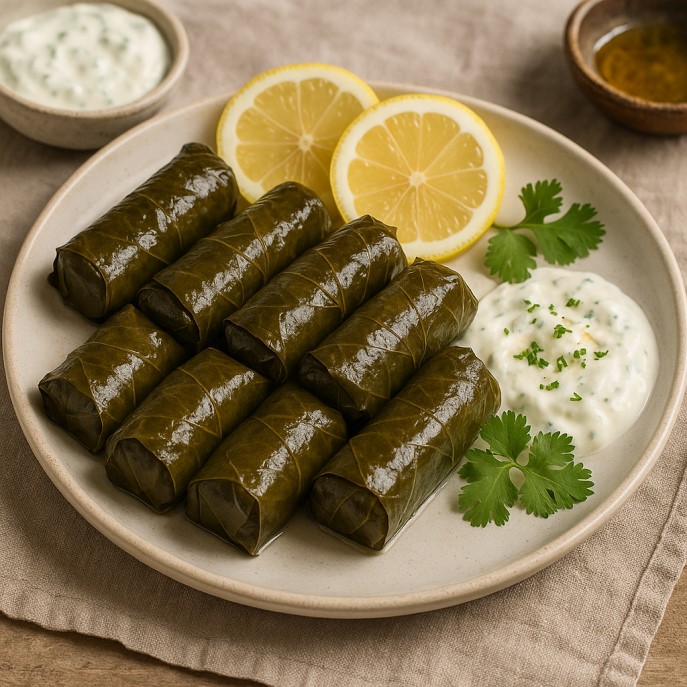
Small grape leaf rolls stuffed with rice, herbs, and sometimes meat.
Interesting fact: The history of dolma dates back to the Ottoman Empire.
-
Souvlaki.
Meat skewers (often pork or chicken) grilled over charcoal.
Interesting fact: Souvlaki is served in pita bread with sauces, reminiscent of modern fast food.
-
Gyros.
Meat roasted on a vertical grill, served in lavash or pita bread with vegetables and tzatziki.
Interesting fact: Gyros is the Greek equivalent of Turkish doner or Arabic shawarma.
-
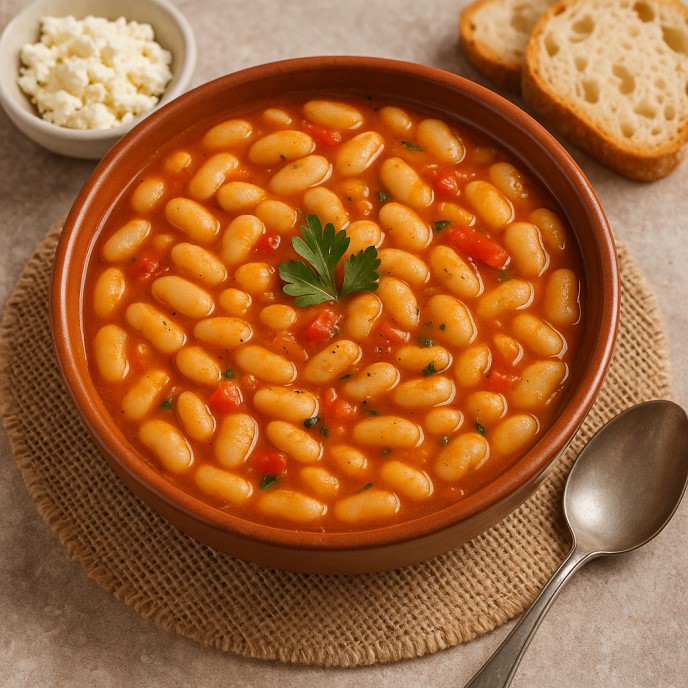
Kvasolada.
A classic Greek hearty soup made with white beans, carrots, tomatoes and olive oil.
Interesting fact: This is Greece’s official ‘national dish’.
-
Taramasalata.
Fish roe purée mixed with bread or potatoes, olive oil and lemon juice.
Interesting fact: This dish is a must on Clean Monday, the beginning of Lent.
-
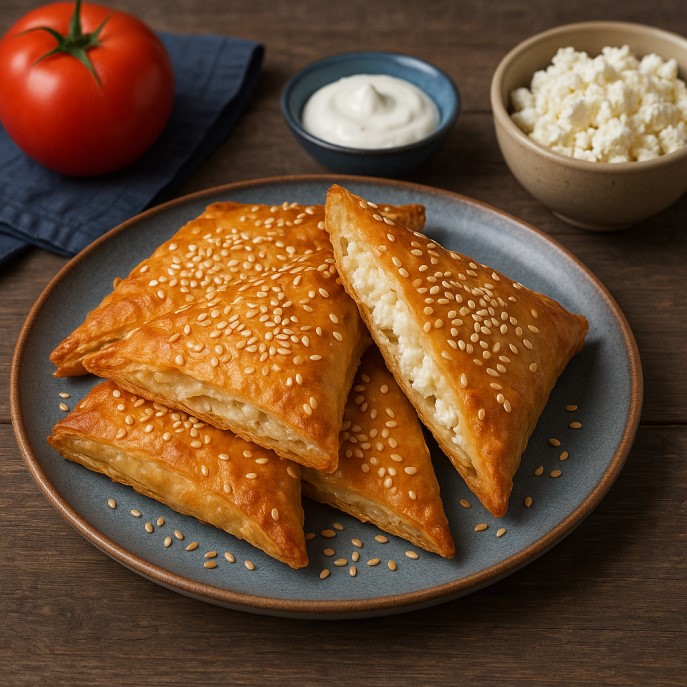
Tyropita.
Puff pastries with feta cheese or a mix of cheeses, baked in crispy filo pastry.
Interesting fact: Served as breakfast, a snack or a dish at a buffet.
-
Spanakopita.
A pie made of spinach, feta cheese and greens in puff pastry.
Interesting fact: Popular during fasting because it does not contain meat.
-
Stifado.
Beef or rabbit stew with onions, cinnamon and red wine.
Interesting fact: The name comes from the Italian stufato, meaning ‘stewed’.
-
Kalamari.
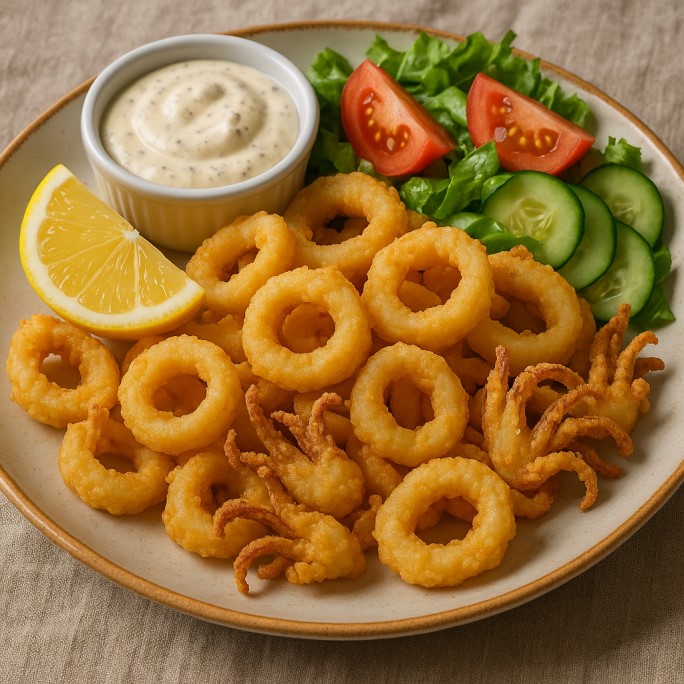
Fried squid rings in a crispy crust.
Interesting fact: Calamari is often served at many seaside resorts along with ouzo.
-
Horiatiki (Greek salad).
A traditional salad of tomatoes, cucumbers, feta cheese, olives and red onions.
Interesting fact: In Greece, the salad never contains lettuce or vinegar.
-
Tzatziki.
Greek sauce made from yoghurt, cucumbers, garlic, olive oil and mint or dill.
Interesting fact: Its base is Greek yoghurt, which is considered one of the healthiest in the world.
-
Keftedes.
Fried balls of minced meat with herbs.
Interesting fact: They can be found in many Mediterranean countries, but the Greek version has a unique spiciness.
-
Kokoretsi.
An original dish made from offal wrapped in intestines and roasted on a spit.
Interesting fact: Traditionally prepared for Easter.
-
Galaktoboureko.
A delicious dessert made from semolina and custard, wrapped in filo pastry and drizzled with syrup.
Interesting fact: The name comes from the words ‘gala’ (milk) and ‘bourek’ (pie).
-
Loukoumades.
Interesting little doughnuts, deep-fried and drizzled with honey and cinnamon.
Interesting fact: Loukoumades were served during the first Olympic Games in Ancient Greece.
-
Baklava.
It is not difficult to prepare – layers of filo pastry with nuts and honey syrup.
Interesting fact: Despite disputes between Greece, Turkey and the Middle East, the Greek version is distinguished by the use of cinnamon in the dish.
-
Revani.
A sweet semolina cake drizzled with lemon syrup.
Interesting fact: Often served at christenings and weddings.
-
Yoghurt with honey and nuts.
A simple dessert that has become an icon of the Greek breakfast.
Interesting fact: Greek yoghurt is considered a superfood due to its high protein and probiotic content.
Where to start your journey into Greek cuisine?
Start small: order souvlaki, try tzatziki or make spanakopita at home. Greek cuisine is the taste of the Mediterranean, accessible to everyone. According to the Harvard T.H. Chan School of Public Health, the Mediterranean diet (including Greek cuisine) is one of the healthiest in the world (‘Diet Review: Mediterranean Diet,’ HARVARD T.H. CHAN SCHOOL OF PUBLIC HEALTH, The Source Nutrition, 2022).
In addition, recent studies have confirmed the use of the Mediterranean diet as a good model of healthy and beneficial nutrition for the prevention of cardiovascular disease, a real increase in life expectancy and healthy ageing.
